
BISP 8171 Biometric Payment System 2025
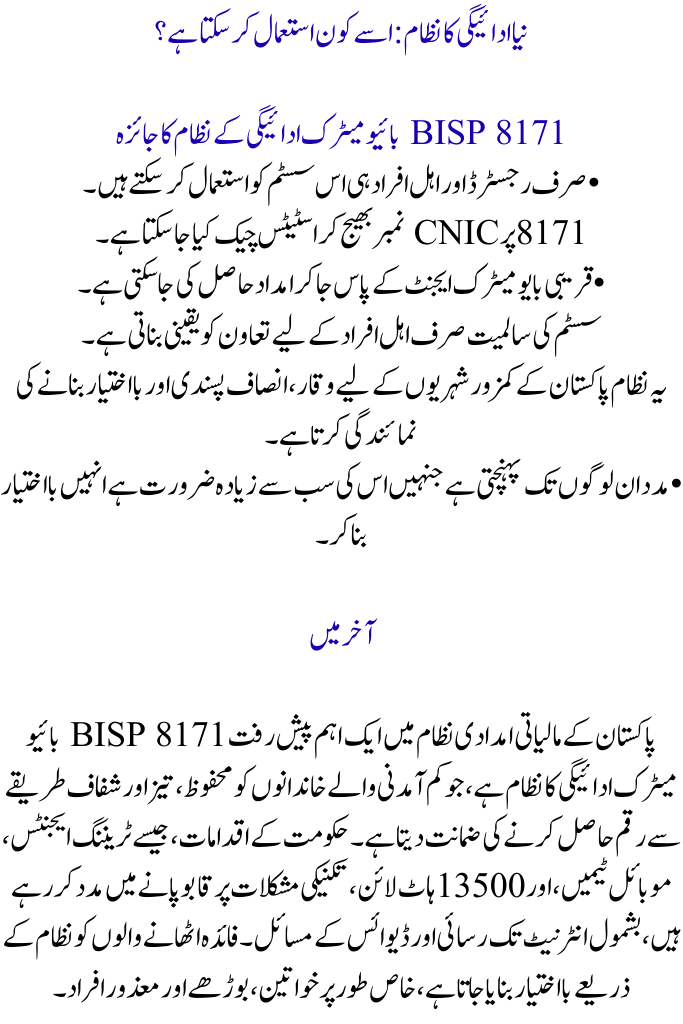
The BISP 8171 Biometric Payment System 2025 is a modern and secure method introduced by the Government of Pakistan to ensure that financial assistance under the Benazir Income Support Programme (BISP) reaches only deserving beneficiaries. This system replaces manual payment methods with fingerprint-based biometric verification, making the payment process faster, safer, and more transparent.
With millions of families depending on BISP stipends, the biometric system plays a vital role in reducing fraud, eliminating middlemen, and ensuring timely payments. Beneficiaries can now receive their money through authorized biometric agents in both urban and rural areas, without unnecessary paperwork or delays.
Why the Biometric Payment System Was Introduced
Before the biometric system, many beneficiaries faced serious issues such as fake deductions, identity fraud, long waiting lines, and delayed payments. In some cases, money was withdrawn by unauthorized individuals, leaving deserving families without support.
To solve these problems, the government introduced thumbprint verification linked directly with the NADRA and BISP databases. Now, a payment is released only when the beneficiary’s fingerprint matches official records. This simple step ensures that only the rightful person receives the payment, restoring trust in the welfare system.
The system has been especially helpful in remote areas where banking services are limited. Trained biometric agents and mobile teams now reach villages that were previously underserved.
You can read more: 13,500 Stipend Verified
Key Features of the BISP 8171 Biometric Payment System
The biometric payment model is designed to support both educated and less-literate beneficiaries. It focuses on simplicity, security, and accessibility across Pakistan.
Main Features of the System
-
Uses fingerprint biometric verification instead of manual documents
-
Payments available through trained agents in cities and villages
-
Reduces fraud, delays, and illegal deductions
-
Dedicated helpline (13500) for complaints and guidance
-
Special assistance for elderly, women, and persons with disabilities
This system ensures dignity and ease for beneficiaries while protecting public funds.
How the BISP 8171 Biometric System Works
The biometric payment process is simple and user-friendly. Beneficiaries do not need multiple documents or forms. They only need to visit an authorized biometric agent.
Once the beneficiary provides a thumb impression on the biometric device, the system checks it against the BISP database. If the fingerprint matches, the payment is released immediately. If verification fails, the beneficiary is guided on the next steps.
For areas facing electricity or internet issues, mobile biometric teams are deployed to ensure that payments are not delayed. This is particularly helpful for elderly women and persons with disabilities who cannot travel long distances.
BISP 8171 Biometric Payment System
| Category | Details |
|---|---|
| Payment Method | Biometric fingerprint verification |
| Eligible Users | Registered BISP beneficiaries |
| Payment Check | Send CNIC to 8171 |
| Payment Collection | Authorized biometric agents |
| Coverage | Urban & rural areas |
| Helpline | 13500 |
| Key Benefits | Secure, fast, transparent |
| Common Issues | Fingerprint mismatch, internet problems |
| Government Support | Mobile teams, trained agents |
Benefits of the Biometric Payment System
The biometric payment system has improved the welfare experience for millions of families. It protects beneficiaries from fraud and ensures fairness.
Major Benefits for Beneficiaries
-
Prevents fraud through fingerprint authentication
-
Ensures payments reach the correct person only
-
Removes the role of agents and middlemen
-
Saves time by reducing long queues
-
Improves confidence and transparency in BISP
This system has significantly reduced complaints related to payment deductions and fake withdrawals.
Challenges and Government Solutions
Despite its success, some challenges still exist. Elderly beneficiaries may have unclear fingerprints, and rural areas sometimes face internet or electricity problems. To address this, the government has introduced backup verification options, better agent training, and mobile payment units.
Beneficiaries who face issues can report problems immediately using the official helpline. These steps ensure that no eligible family is left without support.
BISP Helpline 13500 – Support and Complaints
The 13500 helpline is available for all BISP beneficiaries. You can call for:
-
Payment status updates
-
Eligibility confirmation
-
Biometric verification problems
-
Complaints against agents
-
Guidance on next steps
This service helps resolve issues quickly and improves accountability.
Future of Biometric Payments in Pakistan
The BISP biometric system is part of a larger vision to digitalize Pakistan’s welfare programs. In the future, biometric verification may be connected with other social schemes, creating a unified and transparent support system. Improved technology and wider mobile coverage will further strengthen this process, especially in remote regions.
Conclusion
The BISP 8171 Biometric Payment System 2025 marks a major improvement in Pakistan’s welfare delivery system. By using fingerprint verification, it ensures secure, transparent, and timely payments for low-income families. Despite minor technical challenges, government measures such as mobile teams, trained agents, and the 13500 helpline have made the system more accessible. This biometric approach has reduced fraud, increased trust, and protected the rights of millions of deserving beneficiaries.
You can read more: Punjab Green Tractor Scheme Phase 3 Deadline 2026
FAQs
1. How can I check if I am eligible for biometric payment?
Send your CNIC number to 8171 or call the 13500 helpline for confirmation.
2. What should I do if my fingerprint is rejected?
Visit another authorized agent or contact 13500. Mobile teams can assist in special cases.
3. Is biometric payment available in rural areas?
Yes. The government has deployed biometric agents and mobile teams in rural and remote areas to ensure access for all eligible families.